



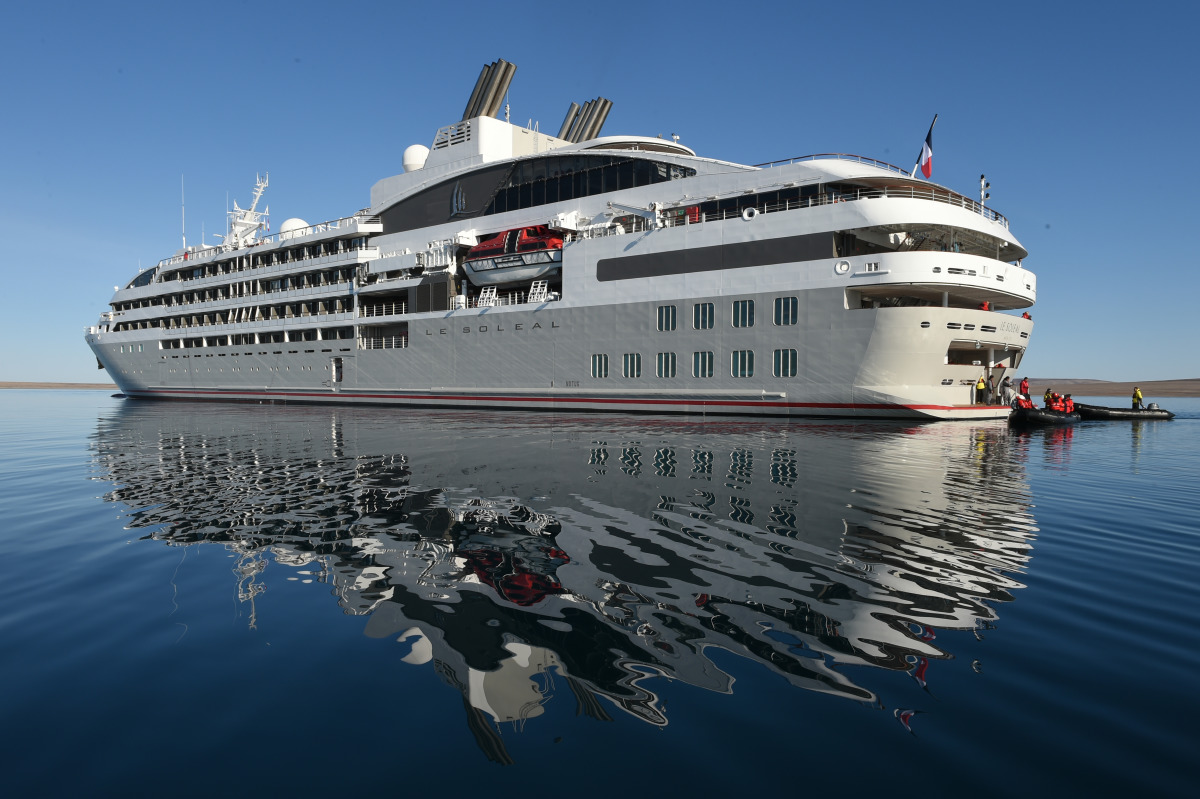
Ponant : 10D9N Faroe Islands & Scottish Archipelagos

Price from

MYR 36,750

Duration

9 Nights

Destination

Denmark, Scotland

Travellers

2

Exclusive Deal

TERMS & CONDITION

Cancellation Policy

~ Postpone or cancel free of charge up to 10 days after the booking is confirmed ~ From 10 days after the booking is confirmed to 365 days prior to departure: EUR 150 plus RM100 refund admin fees per guest per cruise for the cruise service only ~ From 364 to 211 days prior to departure: 10% of total price ~ From 210 – 91 days prior to departure: 25% of total price ~ Cancellation within 90 days prior to departure: 100% of total price

Payment Terms

Deposit payment of 25% must be received within 10 days after the booking is conusrmed. ~ Balance payment must be made 90 days prior to departure ~ Booking made within 90 days prior to departure require full payment at

Destination

Denmark, Scotland

Departure Location

Fairlie, Scotland

Return Location

Glasgow, Scotland

Tour Validity

21 May 2025 - 30 May 2025

The village of Fairlie can be found less than an hour away from lively Glasgow. In the north of Ayrshire county, on the western Scottish coast, this charming little town faces the Isle of Arran.
The originality of Kelburn Castle, built in the 12th century, stems from its façade covered in graffiti by four famous Brazilian graffiti artists.
This artistic statement as well as the castle’s estate and gardens, which can be discovered during a pleasant walk, are well worth a visit.

 dinner
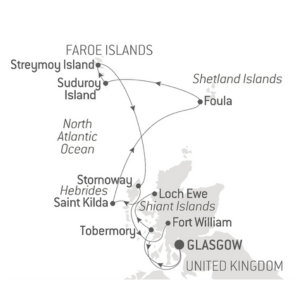
A port town on the eastern shore of Loch Linnhe, Fort William is sometimes described as the “Outdoor Capital of the UK.”  Because it sits at the base of Ben Nevis, the highest peak in the British Isles, and is in close proximity to the dramatic landscape of Glencoe, it is a popular destination for hikers and rock climbers.

Loch Ewe, located in the Northwest Highlands, is a sea loch surrounded by mountains, looking out onto the North Atlantic.
It was an assembly point for maritime trade in the past and military ships used to gather there during the Second World War to organise safe convoys to the Arctic.
On its shores, the loch shelters a remarkable botanic garden, Inverewe Garden, whose many hundreds of tropical plants and species prosper thanks to the Gulf Stream. Protected from the violent winds by endemic pine trees, the garden, which was created in 1862 by landowner Osgood Mackenzie and his daughter Mairi Sawyer, will unveil unsuspected colours, shapes and perfumes.
It is now managed by the National Trust for Scotland. Perhaps you will be lucky enough to glimpse some of Scotland’s wild animals: red squirrels, red deer, otters, seals or golden eagles.

The Shiant Islands derive their name from the Gaelic, Na h-Eileanan Seunta, which means “enchanted isles”. Whether in the mist that frequently envelops the archipelago or beneath a radiant sun, the visitors discovering the Shiant Islands quickly fall under their spell.

A veritable paradise for observing seabirds and marine mammals, the archipelago offers magnificent scenery. Puffins, guillemots and razorbills find refuge in the cliffs here, co-existing with fulmars and black-legged kittiwakes. White-tailed eagles soar above inaccessible cliffs. As for the seals, they gather around rocky formations.

The stone houses stand proudly facing the sea in the charming town of Stromness, the second most populous town in Scotland’s Orkney Islands. Long ago called Hamnavoe – meaning “safe harbour” – because of the safety it provided to Viking travellers, sailors and merchants sailing around Great Britain, the town has retained its gentle way of life.
Strolling along its picturesque streets will immerse you in the history of the fishermen and whale hunters, but also allow you to discover a lively town with a living culture.

On the Atlantic seaboard of the Mainland, Scalloway is a fishing port and the former capital of the Shetland archipelago, a wild territory with windswept jagged coastlines, located off the coast of Northern Scotland. In the 16th century, the Earl of Orkney, Patrick Stewart, had his residence forcibly built there, a castle whose ruins are still visible and which came to symbolise “Black Patie’s” oppressive rule over the Shetlander people. At the far south of the island, the internationally renowned archaeological site of Jarlshof reveals a striking historical snapshot of settlement in the Scottish Far North, from the Iron Age to the Pictish and Viking periods. You will then discover Sumburgh Head, a rocky outcrop topped by a lighthouse; this site is the kingdom of Atlantic puffins and gannets, and is unmissable for birdwatchers!

Foula, lying some twenty nautical miles west of the Shetlands, is the archipelago’s most remote island as well as one of the most remote inhabited British islands: it only has thirty inhabitants, who still observe the Julian calendar, introduced by Julius Caesar in 46 BC. The island rock measures 12.5 km(4.8 square miles) and is characterised by its high cliffs, the largest of which reach 365 m (almost 1,200 feet). Inland, there are farms in the heart of huge expanses of moors and peat bogs where flocks of sheep and herds of ponies live in total freedom. The Vikings were the first explorers to come here and they named it Fugløy or “bird island”. You will be able to explore these green windswept landscapes, to the cliffs of Hiora Wick and Gaada Stack, home to nesting colonies of seabirds, including fulmars, Atlantic puffins and eiders.

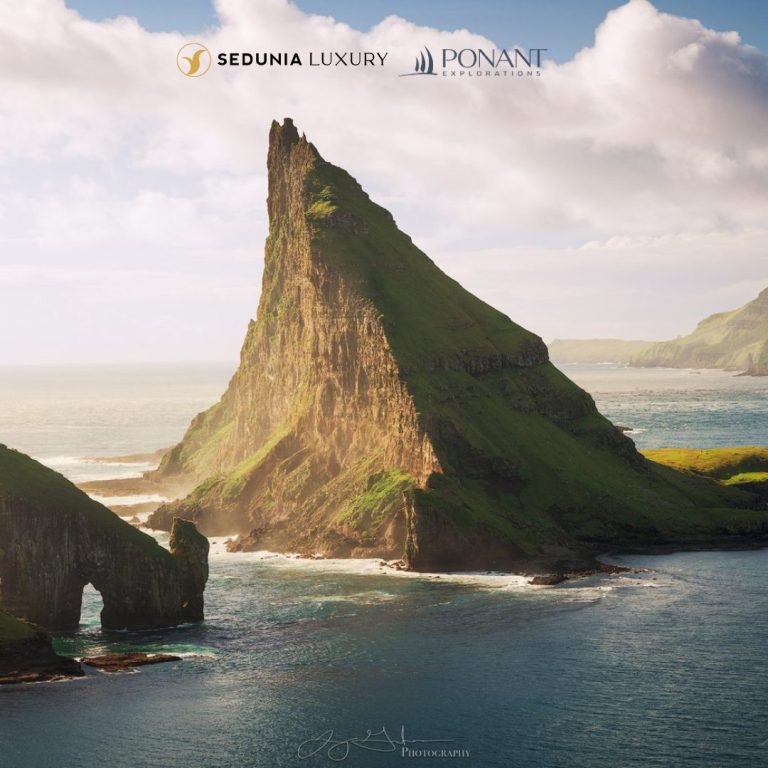
Suduroy Island, literally “South Island”, has one of the smallest populations in the Faroe Islands. It has sheer cliffs along its western face.
The island is an important breeding ground for seabirds, including northern fulmars, black-legged kittiwakes, Atlantic puffins, and guillemots.
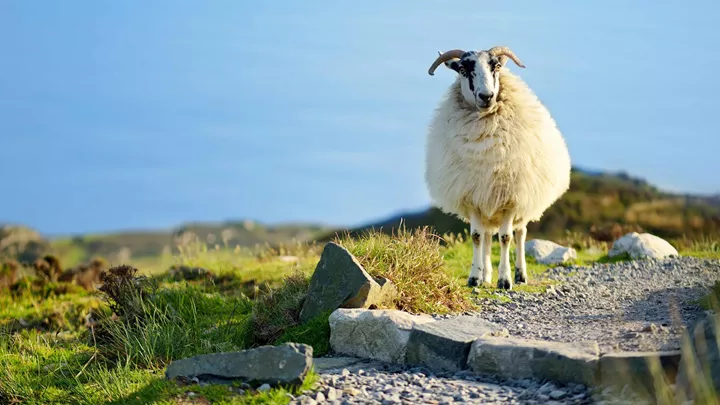
Your expedition team will guide you as you discover the island, its authentic villages with black, tarred-wood churches typical of the Faroe Islands, and its hiking trails lined with peat fields and stone sheepfolds. Sheep are indeed omnipresent throughout the Faroe Islands — in fact, there are more sheep than humans —, and they add to the charm of these wild landscapes.

Streymoy Island is the largest and most populated of the Faroe Islands, with 22,500 inhabitants.
Lying between Scotland and Iceland, the 18-island Danish archipelago boasts natural wonders that will fascinate lovers of the great outdoors. Here, the hilly green landscapes stand in contrast with the huge basalt cliffs and the invigorating air shifts with the moods of the ocean.
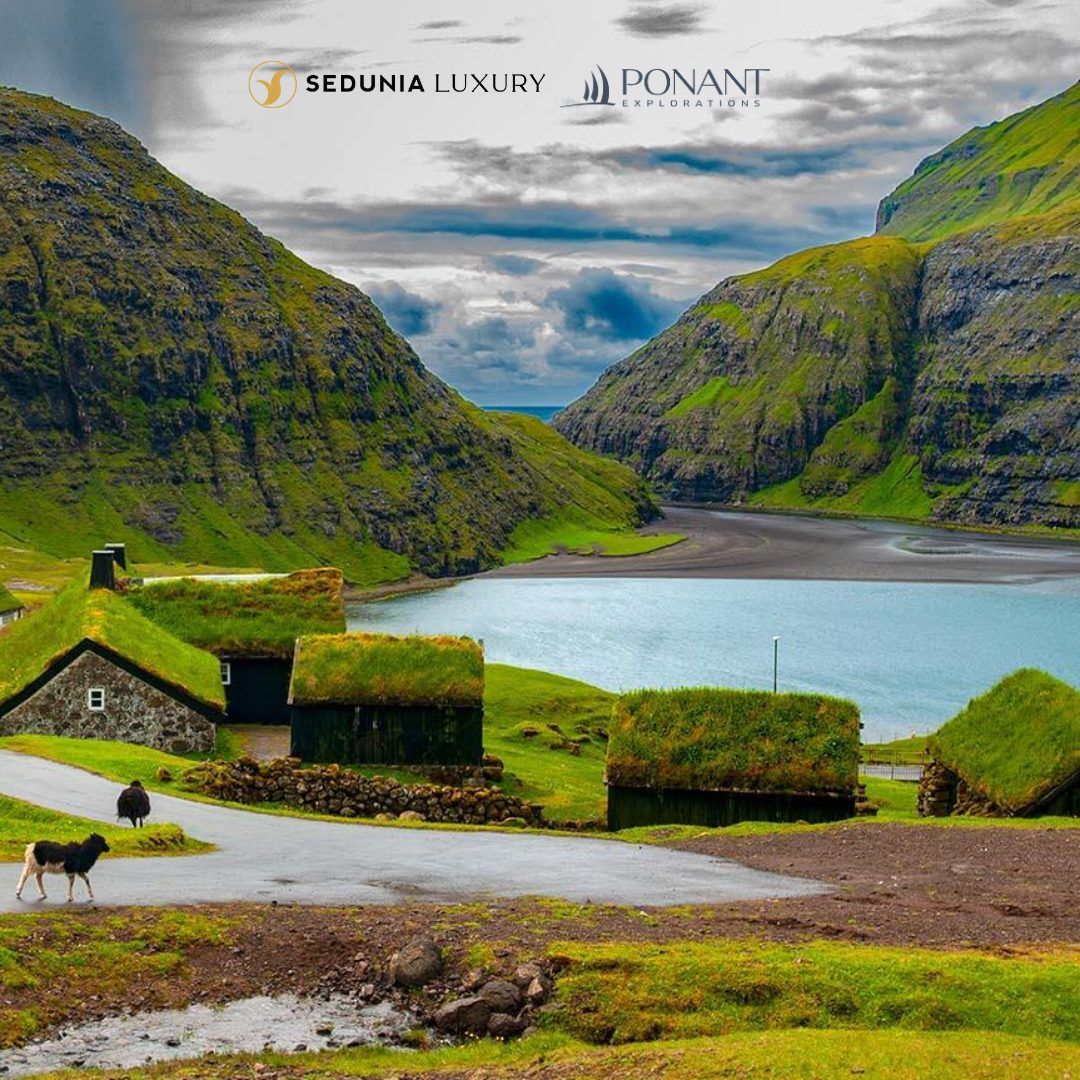
To the north, the small village of Saksun, with its traditional grass-covered rooftops, has 14 inhabitants. In the curve of a magnificent natural amphitheatre, it overlooks a fjord with a lagoon: an idyllic setting in a secluded and peaceful environment.
To the west, in Vestmanna, myriad birds nest in the crags along the eroded and vertiginous cliff faces.

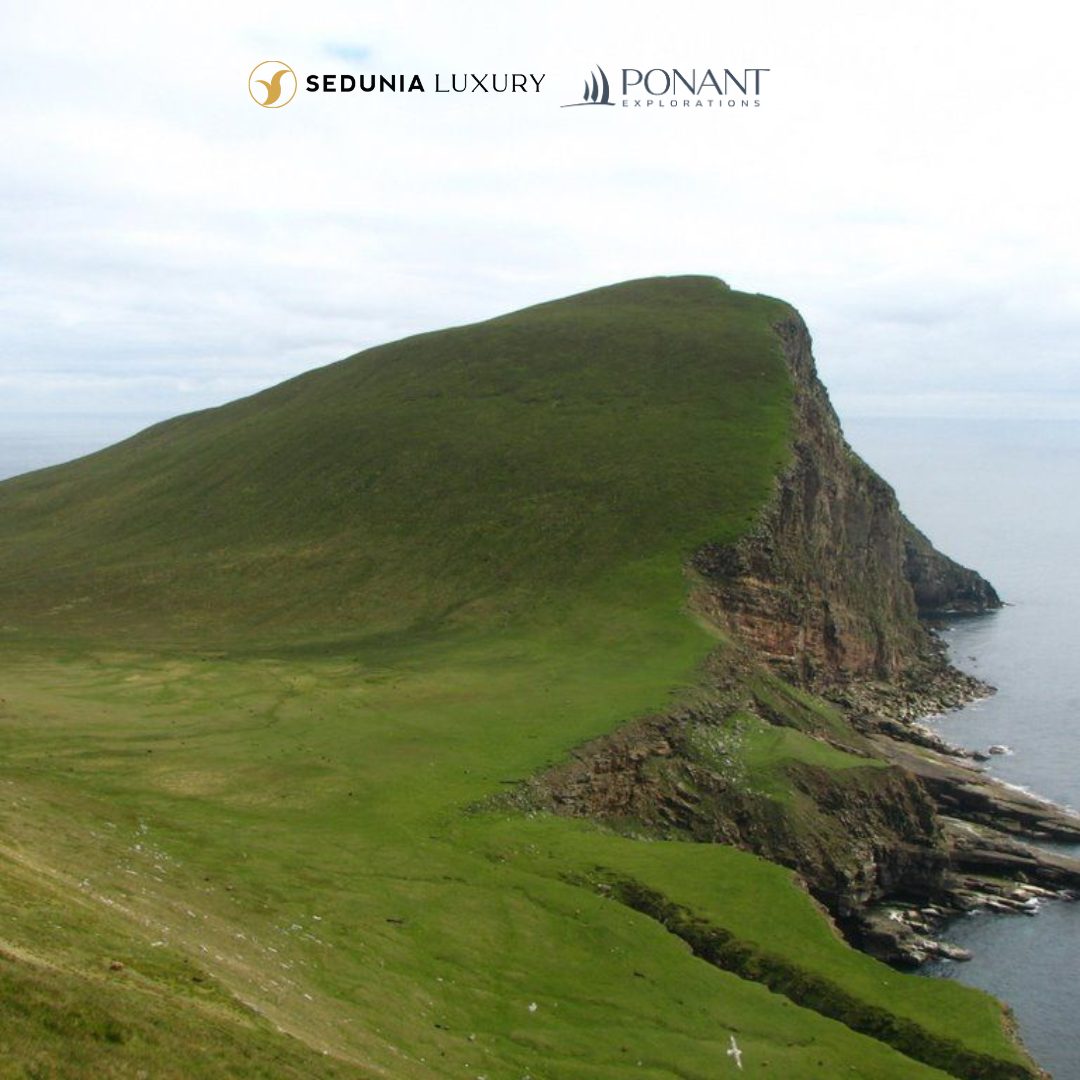
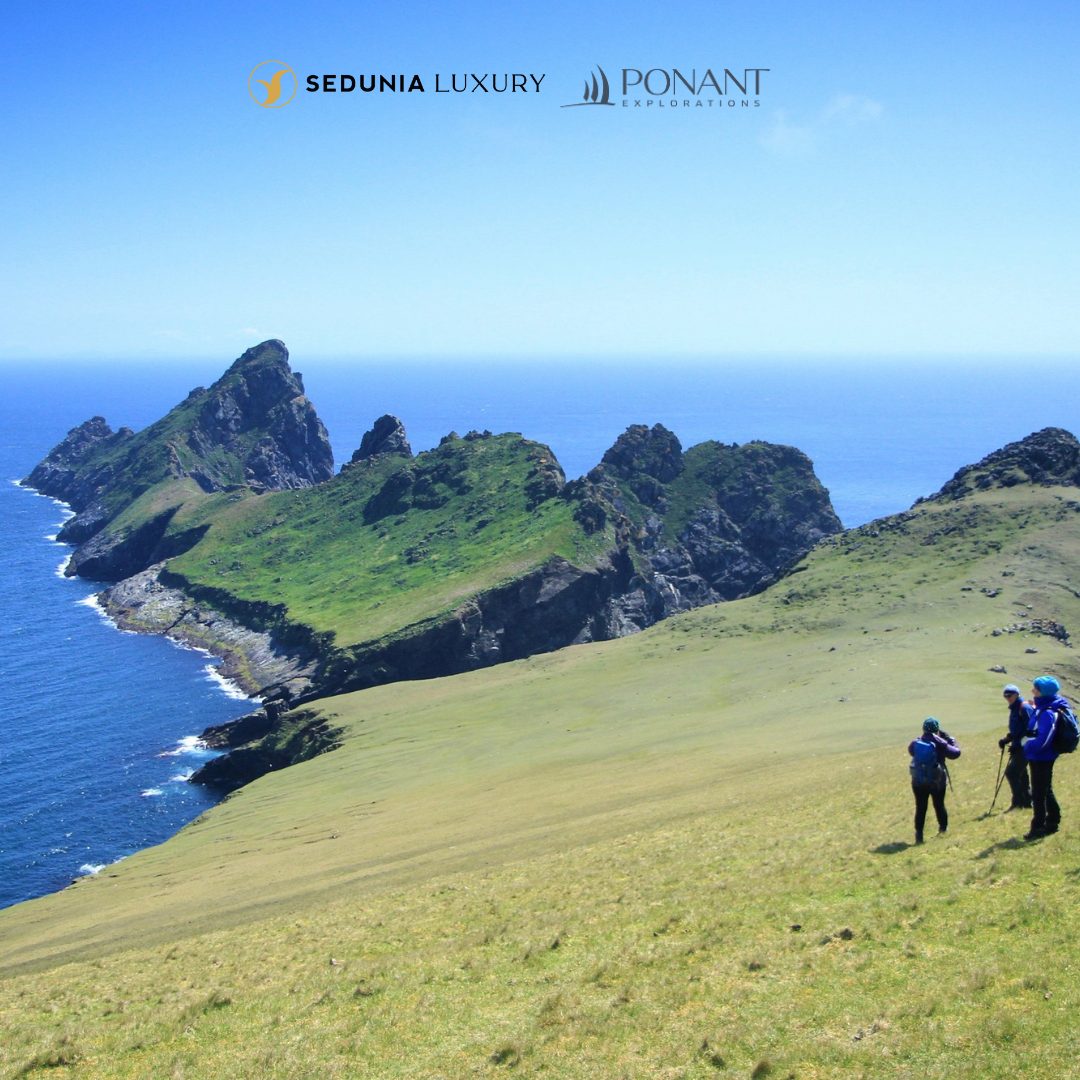
St Kilda is an archipelago of seven volcanic islands, located 35 nautical miles west of the Outer Hebrides. They are the most remote of the British Isles.
It is the only site in the United Kingdom to hold joint UNESCO World Heritage Site status for both its natural and cultural qualities. St Kilda has been managed by the National Trust for Scotland since 1957.
According to the vestiges discovered there, the first travellers to the island appear to date back to the Bronze Age. For 2,000 years, a small community of inhabitants survived there, economically self-sufficient, until the last ones left in 1930.
The village was organised around blackhouses, typical of the Hebrides, cultivable plots and cleitean, dry stone foodstuff storage huts, scattered across the archipelago.
The endemic Soay sheep live wild, while the archipelago’s impressive cliffs shelter colonies of Atlantic puffins and gannets.

Located at the northernmost tip of the lovely Isle of Mull, Tobermory has to be one of the most beautiful natural seaports on Scotland’s West Coast.
Founded in 1788, this ancient fishing village has been converted to a leisure port highly appreciated today for its surroundings and the quiet charm it exudes.
You will definitely be won over by the row of many-storied houses on the hillside, illuminating the harbour with their vibrant colours.
Although the real spectacle is outdoors, no less interesting are the Mull Museum dedicated the local history and the exhibitions at the An Tobar art gallery.

Disembarkation at 8am. End tour
In the heart of the Clyde Valley, the bustling city of Glasgow contrasts starkly with the wild beauty of the surrounding countryside. Scotland’s biggest city overflows with landmarks from its extensive artistic heritage and outstanding architectural tradition.
The city’s chequerboard layout makes walking through the major pedestrian thoroughfares easy: go with the flow and let the lively street atmosphere take you past the many Victorian monuments.
Don’t miss the collections on display in the numerous museums and art galleries. The Kelvingrove Art Gallery and Museum is an outstanding example.

What's included

PACKAGE INCLUDES

Price includes

  • 10 nights shipboard on Ponant Cruise
  • 24 hour room service (special selection)
  • Butler service (special selection)
  • Free unlimited WIFI onboard

PACKAGE EXCLUDE

Price does not include

  • International air ticket
  • Airport transfer
  • Gratuities
Date Price Ship
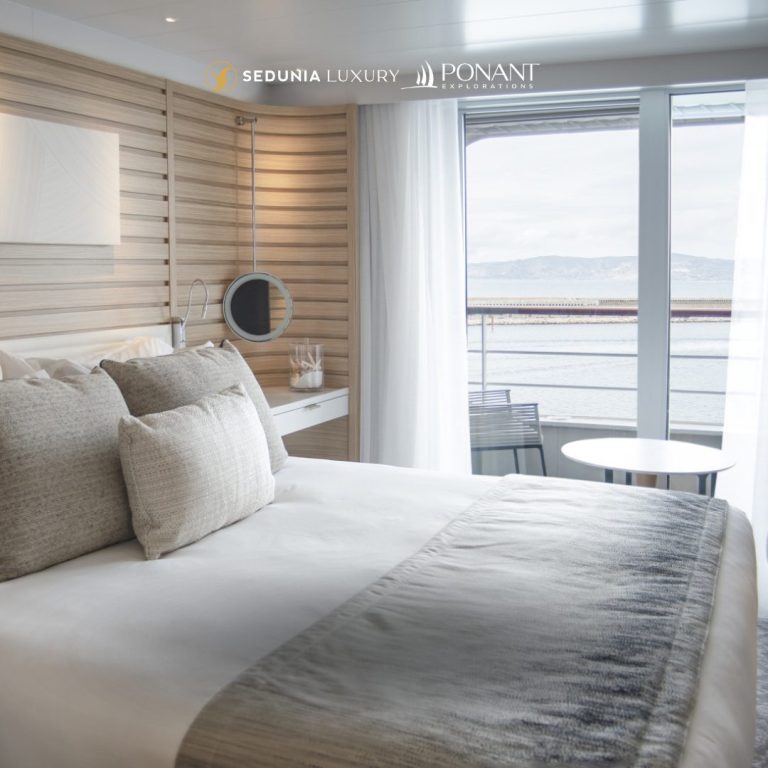
22 May - 31 May 2026 RM 34,104 Deluxe Stateroom (pperson)

*Price is based on Per Person (pp).

Download PDF by Scanning QR Code

QR Code
Ponant : 10D9N Faroe Islands & Scottish Archipelagos
Trip info: Ponant : 10D9N Faroe Islands & Scottish Archipelagos